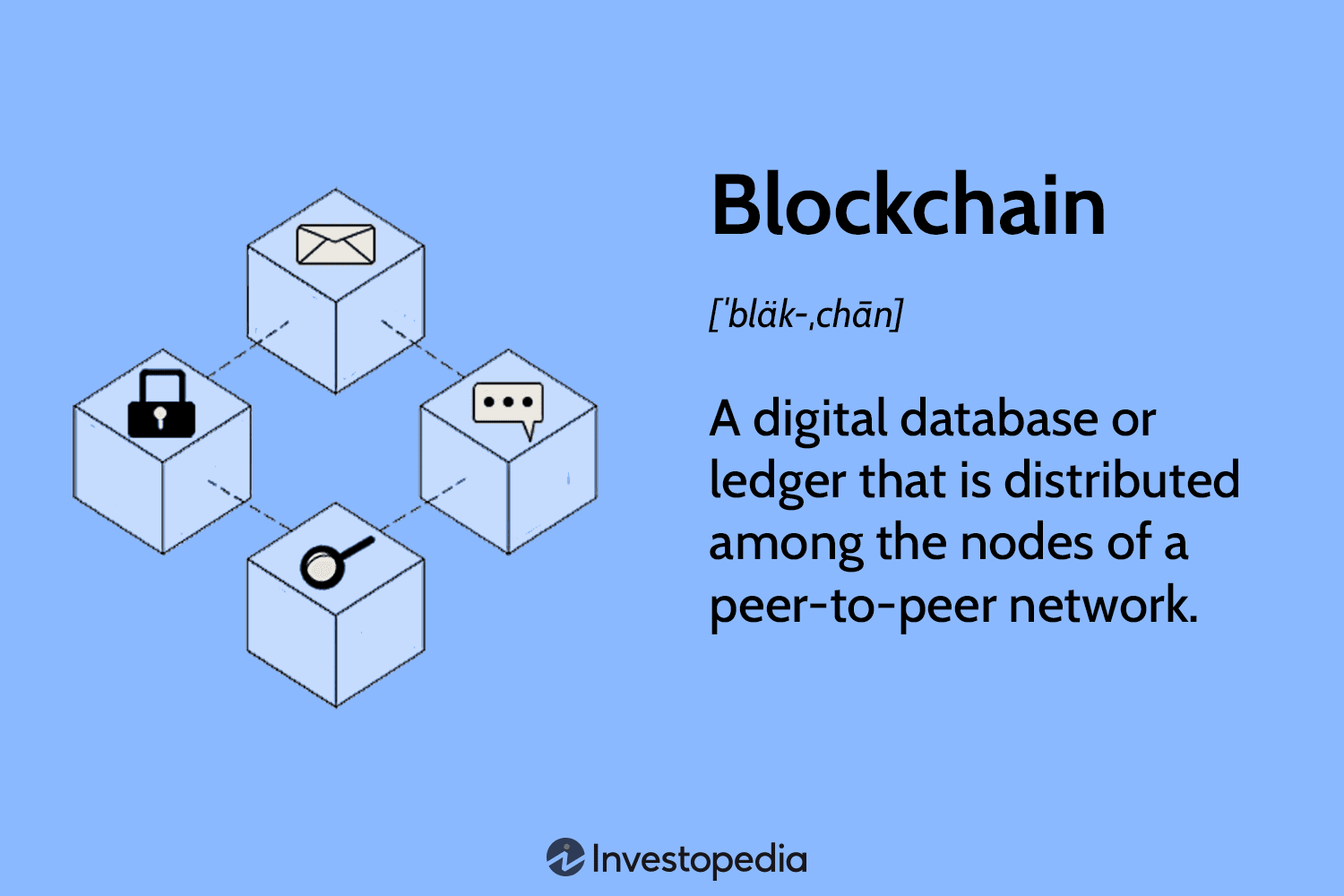
What Is Blockchain? A Simple Guide to the Digital Ledger
In a world increasingly reliant on digital data, trust and security are paramount. This is where blockchain technology emerges as a revolutionary force, offering a fundamentally new way to record and share information. You've likely heard the term in connection with cryptocurrencies like Bitcoin, but what is blockchain beyond its association with digital money? It's a groundbreaking innovation with the potential to transform industries far beyond finance.
At its core, blockchain is a decentralized and distributed digital ledger that securely records transactions across a vast network of computers. Think of it as a shared, unchangeable history book where every entry is verified by multiple parties and is incredibly difficult to alter once written. This innovative structure makes blockchain a powerful tool for enhancing transparency, security, and efficiency in countless applications.
The Core Components: Blocks, Chains, and Cryptography
To truly understand what is blockchain, we need to break down its fundamental building blocks. The name itself offers a significant clue to its design:
- Blocks: Imagine a digital container, or a page in our history book. Each "block" is a bundle of data, primarily containing a list of verified transactions (like financial transfers, data exchanges, or any digital event). Beyond transaction details, a block also includes crucial metadata, such as a timestamp (the exact time it was created) and a unique identifier for the block itself. Once a block is filled with transactions and verified, it's sealed and prepared to be added to the chain.
- Chains: This is where the magic of interconnection happens. Each new block isn't just added randomly; it's cryptographically linked to the block that came before it. This linkage creates a continuous, linear, and chronological sequence – a chain. The integrity of this chain is maintained by a crucial piece of data within each block: a cryptographic hash of the *previous* block. This creates an unbroken, sequential record where every new block solidifies the history of all blocks preceding it.
- Cryptography: The "crypto" in cryptocurrency, and the backbone of blockchain security. Cryptography in blockchain uses advanced mathematical algorithms to generate unique digital fingerprints, known as cryptographic hashes. Each block has its own hash, which is a unique string of letters and numbers derived from all the data within that block. Even a tiny alteration to any piece of data in a block (like a single digit in a transaction or a timestamp) would result in a completely different hash. Because each new block incorporates the hash of the prior block, changing an old block's data would change its hash, which would then invalidate the hash in the *next* block, and so on, creating a "domino effect" that makes tampering immediately detectable and practically impossible to execute on a large, active network.
This ingenious design was first conceptualized by Stuart Haber and W. Scott Stornetta in 1991, but it wasn't until 2008 that an anonymous entity known as Satoshi Nakamoto implemented the first functioning blockchain as the foundational technology for Bitcoin.
Decentralization and Distribution: Why It Matters
Perhaps the most revolutionary aspect of understanding what is blockchain lies in its decentralized and distributed nature. Traditional systems (like banks, governments, or social media platforms) operate on a centralized model: a single entity holds and controls all the data. This creates a single point of failure and requires users to place immense trust in that central authority.
- Decentralization: Unlike a traditional database controlled by one company, no single entity owns or controls a blockchain. Instead, it's managed by a network of independent computers called "nodes." These nodes are distributed globally, and each node maintains a complete copy of the entire ledger. This distributed ownership eliminates the need for intermediaries and fosters a trustless environment, meaning participants don't need to trust each other, only the protocol of the network itself.
- Distribution: The ledger isn't stored in one location. Instead, identical copies of the blockchain are maintained across all participating nodes. When a new transaction occurs and a new block is added, all nodes update their copy of the ledger to reflect this change. This redundancy ensures incredible resilience against data loss or corruption. If one node goes offline or is compromised, the rest of the network continues to operate seamlessly, with its integrity intact.
The combination of decentralization and distribution is a game-changer. It means there's no single server to attack, no central database to corrupt, and no single point of control that can be manipulated. This architecture significantly enhances security, transparency, and resistance to censorship.
How Blockchain Ensures Security and Immutability
The core promise of blockchain technology is its ability to provide an incredibly secure and unalterable record of data. This "immutability" is a cornerstone of its value proposition and directly answers crucial questions about what is blockchain's primary advantage.
Here’s how blockchain achieves this:
- Cryptographic Linkages: As discussed, each block contains the cryptographic hash of its predecessor. This creates a tamper-proof digital bond. If someone were to try and alter a transaction in an older block, that block's hash would change. This change would then invalidate the hash stored in the next block, and all subsequent blocks. This domino effect makes any unauthorized alteration immediately apparent and computationally expensive to fix across the entire chain.
- Timestamping: Every block is permanently stamped with the exact time it was created. This chronological record ensures that events are recorded in the correct order and prevents anyone from trying to retroactively change the sequence of transactions. For instance, the Bitcoin blockchain adds a new block approximately every 10 minutes, creating a continuous, verifiable, and tamper-proof ledger.
- Distributed Consensus: For a new block to be added to the blockchain, a consensus mechanism (like Proof of Work or Proof of Stake, depending on the network) requires a majority of the distributed nodes to verify and agree on its validity. This collective verification makes it nearly impossible for a single malicious actor (or even a small group) to introduce fraudulent data or alter existing records without being detected and rejected by the honest majority of the network. This distributed validation process ensures that the integrity of the ledger is maintained by the collective power of the network, rather than a single point of control.
This intricate web of cryptographic security, timestamping, and distributed consensus makes blockchain incredibly resistant to data modification. Once information is recorded in a block and added to the chain, it becomes virtually irreversible, ensuring that the information is effectively permanent and highly trustworthy. For a deeper dive into these security mechanisms, read our detailed article: The Unbreakable Chain: How Blockchain Ensures Tamper-Proof Data.
Beyond Bitcoin: Real-World Applications and Future Potential
While Bitcoin introduced the world to the practical application of blockchain, the technology's potential extends far beyond digital currency. Today, numerous blockchain networks, such as Ethereum, Solana, and countless others, each boast unique features tailored to a vast array of applications. This expansion highlights the versatility of what is blockchain and its capacity to solve real-world problems.
Consider these transformative applications:
- Finance and Banking: Beyond cryptocurrencies, blockchain can facilitate faster, cheaper, and more transparent international payments, remittances, and digital asset trading (DeFi). It can also streamline back-office operations and reduce fraud.
- Supply Chain Management: Companies can use blockchain to create an immutable record of a product's journey from raw material to consumer. This enhances transparency, verifies authenticity, helps prevent counterfeiting, and enables quick tracing in case of issues like recalls.
- Healthcare: Blockchain can secure patient records, ensuring privacy while allowing authorized parties to access vital information efficiently. It can also track pharmaceutical products to combat counterfeit drugs and improve data sharing for research.
- Digital Identity: Blockchain can empower individuals with self-sovereign digital identities, allowing them to control their personal data and selectively share it without relying on centralized identity providers.
- Voting Systems: The transparency and immutability of blockchain could revolutionize elections by providing a verifiable, tamper-proof record of votes, thereby increasing public trust in democratic processes.
- Intellectual Property: Artists, writers, and creators can use blockchain to timestamp their creations, proving ownership and preventing plagiarism, especially for digital content like NFTs.
The beauty of blockchain is its ability to establish trust and transparency in environments where it previously required costly intermediaries or was simply impossible. It offers a paradigm shift towards truly verifiable and trustworthy digital interactions. As businesses and governments continue to explore its capabilities, we'll likely see blockchain integrate into even more aspects of our daily lives, building more resilient, efficient, and equitable systems. For a more comprehensive look at these broader implications, explore our article: Blockchain Explained: Decentralization, Immutability, and Trust.
Conclusion
In conclusion, what is blockchain can be simply understood as a groundbreaking digital ledger technology that provides a secure, decentralized, and immutable way to record information. By linking cryptographically secured blocks of data across a distributed network, it creates a system that is remarkably resistant to tampering and incredibly transparent. From its origins as the foundation for Bitcoin to its burgeoning applications in supply chains, healthcare, finance, and beyond, blockchain is continually proving its versatility and transformative power.
As the digital world evolves, the need for trustworthy and resilient systems grows. Blockchain offers a compelling solution, empowering users, streamlining processes, and fostering an unprecedented level of confidence in digital interactions. It's not just a technical innovation; it's a new framework for trust in the digital age, promising a future where data integrity and transparency are the norm.